Your drop model is an addiction.
The €45k launch week feels incredible.
But you're broke by Week 3.
The pattern we found
We tracked €800k in revenue for a fashion brand over 6 months.
The pattern was brutal:
- **Week 1:** High fives. "We crushed it."
- **Week 3:** Revenue crashed -84%.
- **Week 4:** Panic. Run more ads. Burn more budget.
Rinse. Repeat. Every. Single. Drop.
Here's what nobody tells you
The drop model doesn't fail.
Your strategy between drops fails.
Most fashion brands have ONE engine.
The Burster. Launch day. Urgency. Scarcity.
But when the Burster stops, everything stops.
The brands that escape this
They built a second engine.
The Builder. Running between drops.
Growing lists. Building brand. Creating demand.
So when the next Burster fires - there's fuel waiting.
Burster vs Builder: Know your drop type
After analyzing a year of drops, I found two distinct patterns:
Burster Drops:
- 48-56% of revenue in first 48 hours
- Explosive start, then silence
- Your fans were waiting
Builder Drops:
- 18-36% in first 48 hours
- Slow start, keeps building
- Needs time to find its audience
Same budget. Completely different playbooks.
Burster strategy on a Builder = wasted launch budget, early panic
Builder strategy on a Burster = missed the wave, audience moved on
The expensive lesson
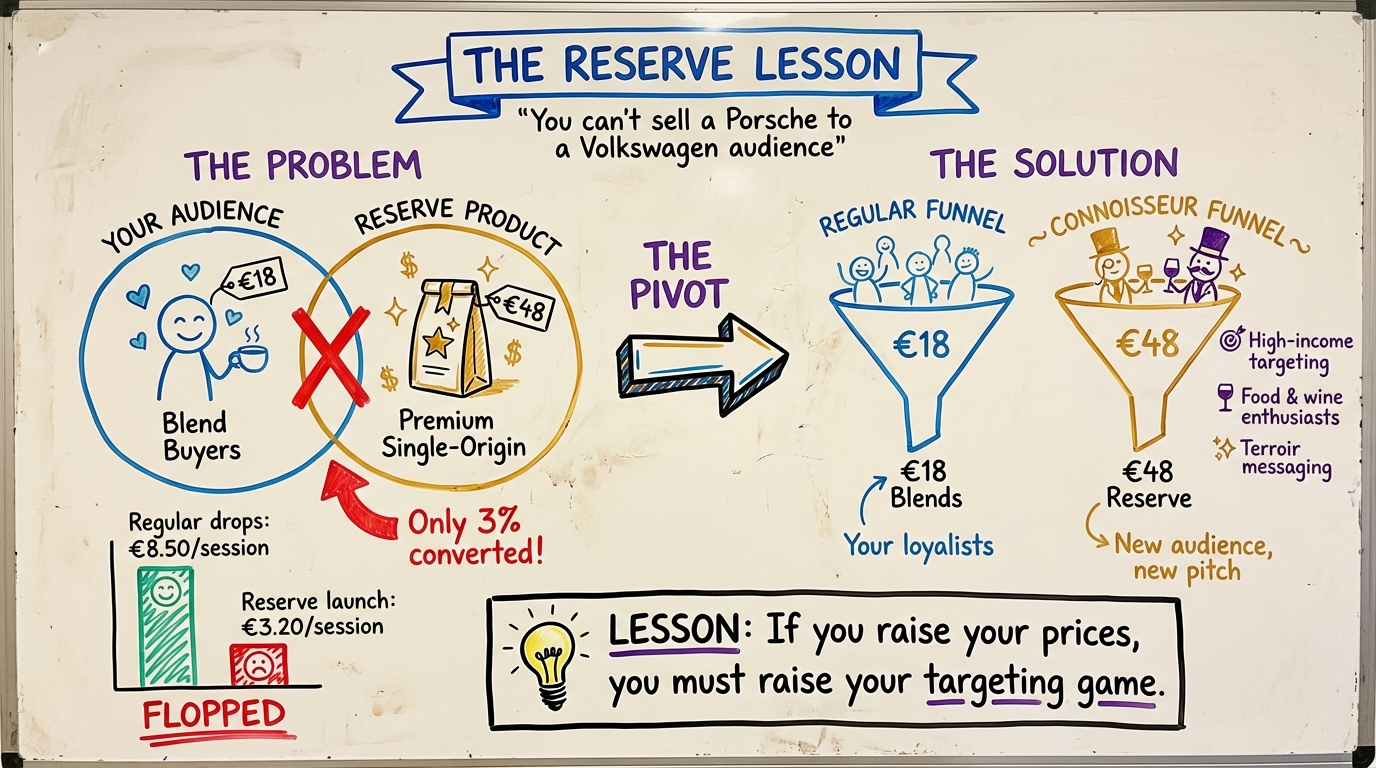
We also made a €300 cashmere line flop.
Revenue per session: €3.50.
Normal launches? €8.80.
Why? We pitched a Porsche to a Volkswagen audience.
The lesson: If you raise your prices, you must raise your targeting game.
What to do about it
Your launch calendar should flag which type each drop is BEFORE you set budgets.
Not after you've already spent the money wondering why it "didn't work."
If you're running drops and tired of the Day 15 crash - check out our CM3 calculator to see where you're actually leaking margin.